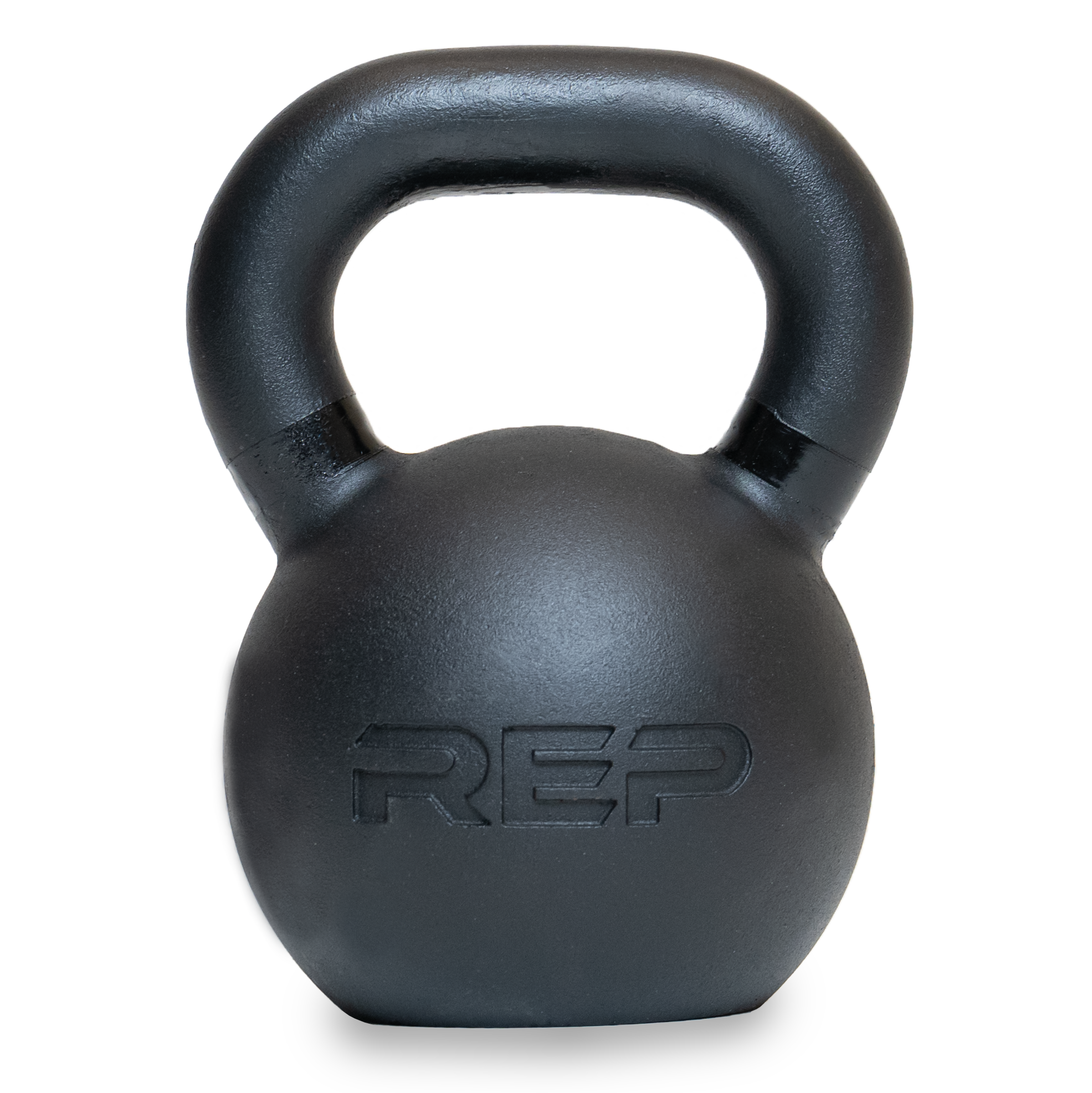
The kettlebell is the most versatile single piece of iron you can own. A 35-pounder does swings, goblet squats, cleans, presses, carries, Turkish get-ups, and single-leg deadlifts — the whole strength-and-conditioning toolkit in a ball of cast iron that fits under a desk. This is the one tool, if you could only have one, that makes a home gym a real gym.
Most guys either skip kettlebells (buying machines or just dumbbells) or buy cheap ones that have rough handles and inconsistent weights. REP Fitness makes gravity die-cast iron with a flat machined base so it doesn't rock, a smooth powder-coated handle that holds chalk, and weights accurate to ±2%. It's the direct-to-consumer option that beats brands at twice the price.
Start with a 35 lb (16 kg) bell. That's the standard starting weight for most men — challenging enough for swings and goblet squats from day one, but light enough that your technique isn't fighting the weight while you're learning.
REP Fitness launched in 2012 in Boulder, Colorado with a direct-to-consumer model for serious home gym equipment. The founders came from a background in commercial gym equipment and set out to close the gap between commercial-grade quality and home-gym pricing. Their cast iron kettlebell line became the enthusiast recommendation on every major fitness forum within a few years of launch.
REP doesn't sell through big-box retail, which keeps the pricing honest. You buy direct and save the retail markup. Their cast iron kettlebells are manufactured with the same gravity die-cast process used by competition kettlebell brands at a fraction of the price.
Learn the swing first. The Russian swing (bell swings to eye level, driven by hip hinge) before the American swing (overhead). The hip hinge is the foundation of the kettlebell — every other movement builds on it. Watch a cued tutorial, not just a demo, and drill the hinge pattern with a light weight before adding load.
Goblet squat comes next: hold the bell by the horns at chest height and squat. It self-corrects your form. From there: kettlebell clean, press, carry. The Turkish get-up is worth learning slowly — it tests more joint stability than almost any other movement.