Pull-ups are the most honest assessment of upper-body strength there is — your arms, your back, your core, moving your own bodyweight through its full range. They build the wide-backed, thick-armed look that bench press can't deliver alone, and they're the most skipped exercise in most home gym setups because people don't have a bar.
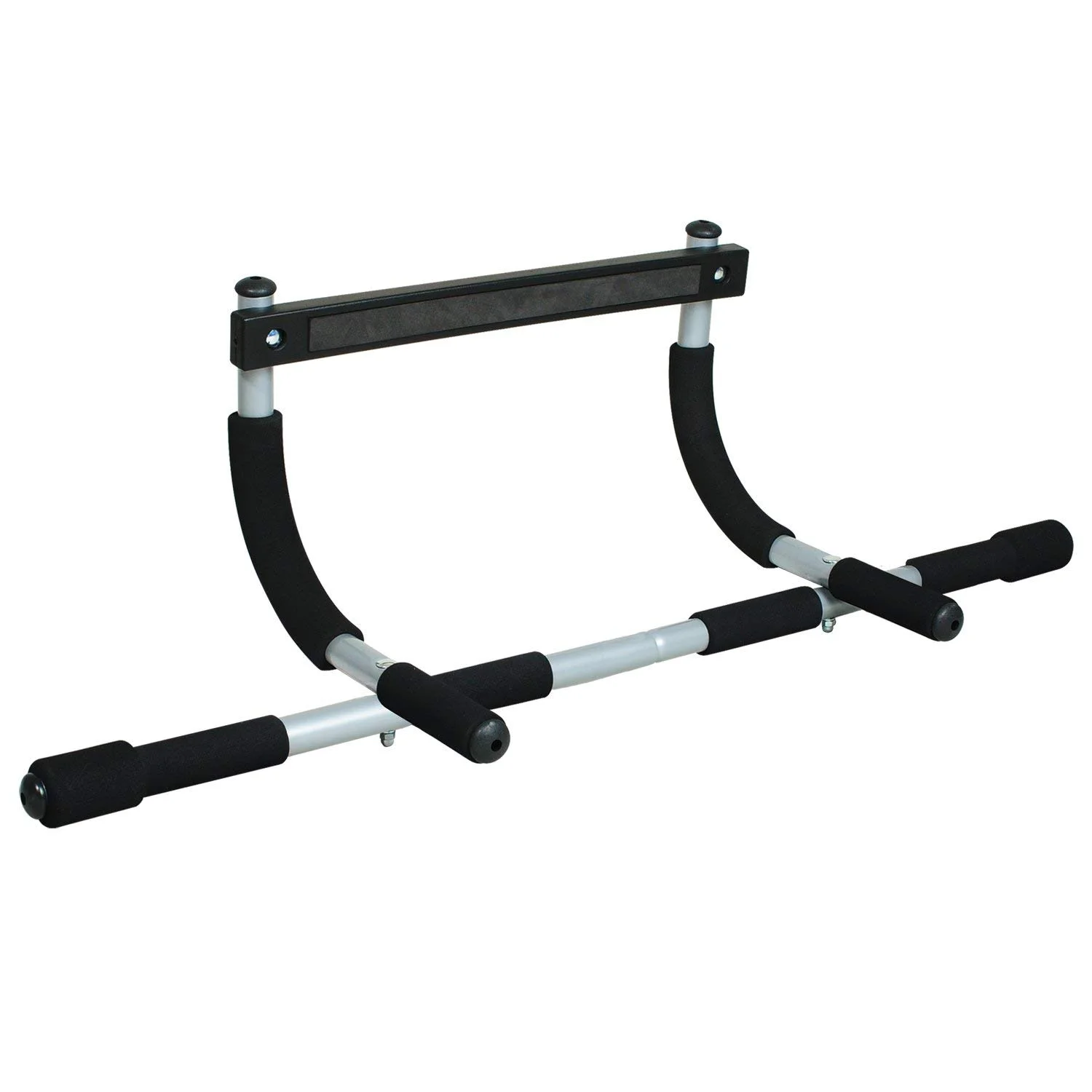
The Iron Gym bar fixes that for thirty dollars. It levers over a standard door frame — no drilling, no mounting hardware, no permanent modification — and holds up to 300 lbs. It takes ten seconds to install and ten seconds to remove. That's the whole product. Functional, durable, and so cheap there's no justification for not owning it.
Also works as a push-up station when placed on the floor and a dip bar when set lower in the frame. Three movements, one piece of equipment, one corner of your apartment.
Iron Gym launched the doorframe pull-up bar concept in the mid-2000s and essentially defined the category. The design is brilliantly simple: a bar that uses your own bodyweight pressing against the door frame to stay in place. No anchoring, no damage to the frame — just physics.
The brand has iterated on the original design with better foam grips and wider adjustment range, but the core mechanism hasn't changed because it didn't need to. This is one of those rare products where the first version got it right.
Start with 3 sets to failure, 3–4 times per week. "Failure" for most beginners is 1–3 reps — that's fine, start there. Dead hangs (hanging with arms fully extended) count for shoulder health and grip strength even before you can do a full rep.
Chin-ups (palms facing you) are easier than pull-ups (palms away) and hit the biceps harder. Wide grip hits the lats more. Alternate to hit everything. If you can't do a full rep yet, use a resistance band looped under your knee as a counterweight.