The flat shoe principle is one of the genuine insider tips in fitness that nobody teaches beginners. Every major training shoe — the Nike Metcon, the Reebok Nano, the NoBull Trainer — has a slight heel raise and a cushioned, compressible sole. That design exists for dynamic movement: box jumps, running, lateral cuts. For heavy squatting and deadlifting, it's the wrong tool.
What you want for strength training is a flat, hard sole that transfers force directly from your foot into the floor without any energy loss through cushioning. The heel-to-toe drop on most training shoes (4–8mm) also shifts your center of mass forward, which changes squat mechanics in a way that hurts your depth and puts more stress on your knees than it should.
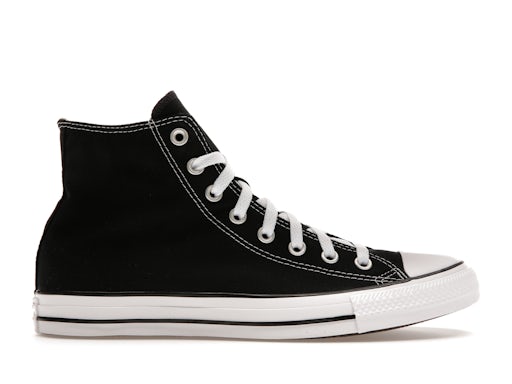
A pair of black Converse Chuck Taylor All-Stars has a flat vulcanized rubber sole and zero heel-to-toe drop. They've been worn under heavy bars since powerlifters started looking for flat shoes in the 1980s. They work perfectly, they're not gear-bro conspicuous, they cost $55, and they're wearable outside the gym. If you're not competing in weightlifting specifically (where an elevated heel is actually useful for Olympic lifting), there's no case for an expensive training shoe.
Converse was founded in 1908 in Malden, Massachusetts. The Chuck Taylor All-Star was introduced in 1917 as a basketball shoe and became a cultural icon through decades of wear by athletes, musicians, and anyone who needed a reliable, versatile canvas shoe. Chuck Taylor himself, a Converse salesman and basketball player, promoted the shoe through clinics across the country — his name went on the ankle patch in 1934.
Nike acquired Converse in 2003. The Chuck Taylor has remained essentially unchanged from the original design, which is exactly why it works for lifting — no optimization for modern running shoe technology, just the flat canvas and rubber of the original. It's been accidentally the perfect lifting shoe for decades.
High top vs. low top is personal preference for lifting — neither gives meaningful ankle support (the canvas doesn't brace against force the way a rigid boot does). Low top is lighter and more versatile on the street. High top stays in place better during squats but isn't necessary.
Wear them for strength training: squats, deadlifts, bench press, barbell rows. Switch to a running or cross-training shoe if your session includes sprints, box jumps, or rope work. The hard sole that's great for heavy squats is not great for absorbing landing impact.